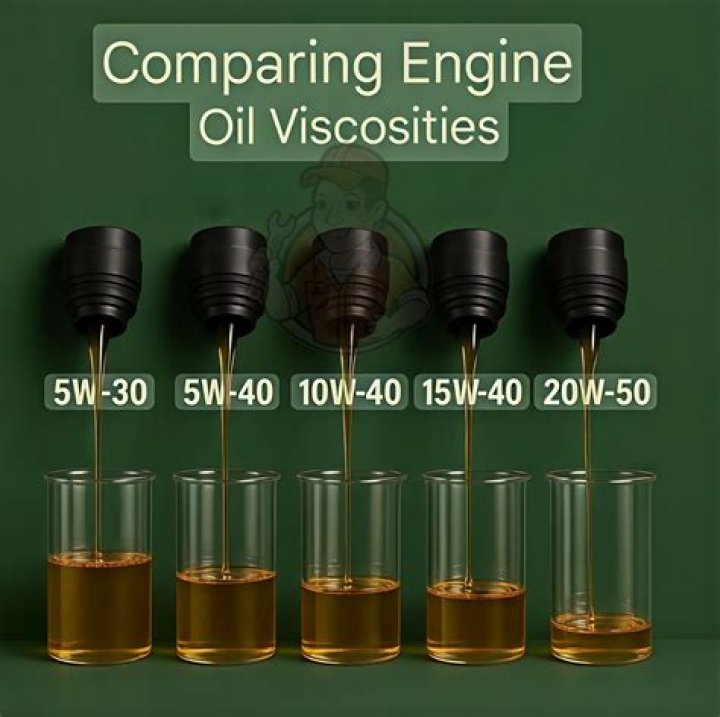
yes you can mix same brand and type oils with different viscosity and it will be fine as long as you don't mix them 50/50. If you mix 200 ml of oil with the rest of oil needed for your engine you will be totally fine.
Can you mix synthetic oil viscosities?
Yes. It won't harm your engine to mix, for example, Quaker State® motor oil with Pennzoil, as long as the oil you use is the weight (or viscosity) recommended in your vehicle owner's manual.Can you mix engine oils different weights?
The truth is simple: don't mix two different oils that have different weights (viscosities). Viscosity Grades might sound pretty scientific, but the simple fact is that this is what keeps your engine running smoothly.Is it OK to mix motor oils?
Since motor oils are generally made from the same ingredients (base oil and additives), they are typically compatible when mixed. (The American Petroleum Industry actually requires that all motor oil made in the U.S. be compatible with one another.)Can you mix 10w 30 and 10w 40?
Mixing 10W30 with 10W40Some say that mixing them is fine as long as you don't live in freezing weather. Even if you put together synthetic and conventional blends of these motor oils, they show no harm to your vehicle. However, this is true only if you mix in a quart of the other type to your usual engine oil.
Will Mixing 10 Motor Oils Damage an Engine? Let's find out!
What if I use 10W40 instead of 5W30?
Your vehicle does not use 5W-30 oil. The recommended oil viscosity for your vehicle, according to Kia documentation, is 10W-40. If you drive the vehicle in exceptionally cold weather, well below 32 degrees, you can use 5W-30 oil but even 10W-40 is still perfectly OK to use if outdoor temperatures are below freezing.Which oil is thicker 10W30 or 10W40?
The difference between 10W-30 and a 10W-40 is the high temperature viscosity. Obviously, a 10W-40 is thicker than a 10W-30 at high temperature.Is it OK to top up engine oil with different brand?
You can add any engine oil as long as it has the right specifications — preferably with an official approval of the OEM (Original Equipment Manufacturer). Not the brand, but the specification and viscosity indicated in your car's manual are your reference for using the right oil.Can you mix 15w40 and 10w40?
There is absolutely no harm in mixing different grades of engine oil! All motor oils are required to comply with international standards which include a compatibility test.Will the wrong oil damage my engine?
Cause damage to engine lifeThe wrong engine oil can cause engine damage because it does not properly lubricate its components. This will lead to metal-on-metal contact since the moving parts are not being lubricated. Friction quickly follows, causing engine parts to wear.
Can you mix 5w 20 and 10w 30?
Notwithstanding the recommendations of the car manufacturer, mixing 10w30 and 5w20 will not cause any sort of harm to the engine. However, a few drivers claim that it is safer to combine two multi-grade or straight weight oils, rather than mixing multi-grade with straight weight oils.What happens if you mix synthetic oil with regular oil?
So, in the end, conventional and synthetic oils are comprised of the same, compatible components – it's just that the components in synthetics are much higher quality. While you can safely mix synthetic and conventional oils, you're doing nothing more than diluting the performance of the synthetic oil.Can you mix synthetic oils of same weight?
Viscosity is formulated into the synthetic, but there's no problem mixing. You can mix Synthetic and Mineral oils too, if you want.Can you mix different viscosity hydraulic oils?
Mixing oils with different additive packages is never recommended. Doing so could compromise the additive performance of both constituents, cause corrosion of component surfaces and lead to increased mechanical wear.Can I mix 5W30 with 15W50?
Will a mix of 15W50 and 5W30 oils oils have the same lubricating performance? The answer is no. An engine requiring 50 grade oil will wear out faster with an oil with lower viscosity.What is 15W-40 oil used for?
ADVANTAGE 15W-40 HEAVY DUTY DIESEL ENGINE OIL can be used with complete success in over-the-road diesel trucks, off-highway diesel equipment, farm tractors, and passenger cars and light trucks with diesel, turbo-charged diesel engines, or gasoline engines and is backward compatible with previous API Oil Categories.What is 10W 40 oil used for?
This oil weight is commonly used in diesel engines or in a smaller motorcycle engine too. The 10W-40 oil viscosity also often serves as an alternative for older engines with burning or oil leaking issues. Why is that? The 10W-40 engine oil has a thicker viscosity than, say, 10W-30 oil when the car engine is hot.Can thick oil damage engine?
Not only that, but the engine will waste energy pumping the thicker oil, reducing fuel economy. Since thicker oil doesn't transfer heat as well as thinner oil, operating temperatures will increase, possibly leading to accelerated chemical break down (called “oxidation“) and harmful sludge and deposits.Is 10W40 good for high mileage?
Designed for high mileage vehiclesMobil 1 High Mileage 10W-40 motor oil is recommended by ExxonMobil for use in high mileage vehicles (even those that have used lower quality conventional oils†), including: Cars. Trucks.