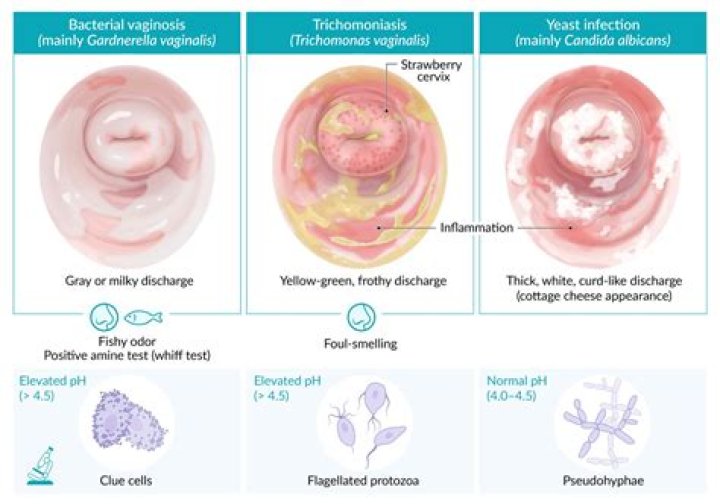
Because women with BV possess a Lactobacillus-poor flora, their changes in the vaginal ecosystem may provide biological plausibility for an increased risk or reactivation of HPV infection.
What can a BV turn into?
Research has shown that untreated or improperly treated BV is associated with increased risk of: Research has shown that untreated or improperly treated BV is associated with increased risk of: Getting STIs like HPV, herpes, trichomoniasis (trich), chlamydia, gonorrhea, and HIV.Can BV lead to cervical cancer?
Invasive cervical cancer is often associated with bacterial vaginosis (BV) caused by both non-pathogenic and pathogenic bacteria and other microorganisms. BV goes un-noticed during the clinical course of cervical cancer. The incidence of BV is very high among women from developing countries with poor genital hygiene.Can bacterial vaginosis cause abnormal cervical cells?
Bacterial vaginosis, the most widespread vaginal infection in the United States, is associated with a 357% increase in the incidence of cervical intraepithelial neoplasia (CIN), an abnormality of cervical cells that may lead to cervical cancer, according to a study published in the Scandinavian journal Acta Obstetricia ...Can BV turn into a STD?
Bacterial Vaginosis (BV)Having BV can increase your chance of getting an STD. Bacterial vaginosis is the most common vaginal condition in women ages 15-44. Treatment is especially important for pregnant women.
Medicine Monday: Sexual Health - The risk of unprotected sex, BV, HPV. Is your partner cheating?
Can untreated BV turn into STD?
If left untreated, BV can increase your risk for sexually transmitted infections (STIs) such as herpes, gonorrhea, chlamydia, and HIV.What happens if you have BV for a long time?
Most often, BV does not cause other health problems. However, if left untreated, BV may increase your risk for: Sexually transmitted diseases (STDs) like herpes, chlamydia, gonorrhea, and HIV. Pelvic inflammatory disease where BV bacteria infect the uterus or fallopian tubes.Can BV cause positive HPV test?
Bacterial vaginosis - cervical human papillomavirus association. Analysis of the association between BV and cervical HPV infection shows that HPV prevalence is significantly higher in BV positive women in only three out of twelve studies compared to women without BV [14,17,23].What bacteria causes HPV?
At genus level, Lactobacillus was predominant in both HPV groups; negative and positive (89.7% in HPV negative and 86.7% in HPV positive). At species level, L. iners, mainly the OTU 133075, was the predominant Lactobacillus group in both HPV negative and positive samples (47.7% vs 18.6%, respectively, p-value = 0.07).Does BV show up on Pap smear?
The positive predictive value of Pap smear to diagnose BV was 56.5% (CI – 47.8%–64.9%), and the negative predictive value was 71.2% (CI – 61.8%–79.4%).Is HPV a virus or bacterial infection?
HPV, or human papillomavirus, is a common virus that can cause cancers later in life. You can protect your child from these cancers with HPV vaccine at age 11–12 years.Can HPV cause a fishy odor?
With BV, you will see an increase in discharge as well as a strong fishy odor that gets strong after sex. After proper diagnosis, you can be treated easily with prescription oral pills and vaginal gel. Many STDs such as Trichomoniasis, (“Trich”) Gonorrhea, Clamydia, HPV, Syphylis and even HIV can cause a vaginal smell.Can a yeast infection cause a positive HPV test?
In some cases , a yeast infection may not cause any symptoms, so a person may not know they have it. In this case, the Pap smear result may come back as ASC-US. If this happens, the NCI states that the doctor may perform an HPV test if they did not do this previously to determine if the abnormal result is due to HPV.How long will BV last if untreated?
Once you start treatment with a simple course of antibiotics, the symptoms of bacterial vaginosis (BV) usually go away within two to three days. While in some cases it can resolve on its own without treatment, it can take longer to clear up and it can come back.How do you get rid of chronic BV?
However, taking the following steps may help reduce your risk of recurring BV infections.
- Pay attention to vaginal hygiene. ...
- Wear breathable underwear. ...
- Ask about boric acid suppositories. ...
- Use condoms. ...
- Maintain a healthy vaginal pH. ...
- Take a probiotic. ...
- Find healthy ways to destress.
What if BV won't go away?
This can be frustrating. Bacterial vaginosis makes the reproductive tract vulnerable to infection or inflammation. So your doctor will test and treat you with antibiotics if you are: Having symptoms that won't go away.What are the signs of HPV in a woman?
HPV can infect cells in the vagina and around the vulva. If a female has low risk HPV, they may see warts on the vulva. These warts may present as: a cluster that looks like a cauliflower.
...
Some symptoms of vaginal cancer include :
- bleeding after sex.
- unusual discharge.
- a lump in the vagina.
- pain while having sex.